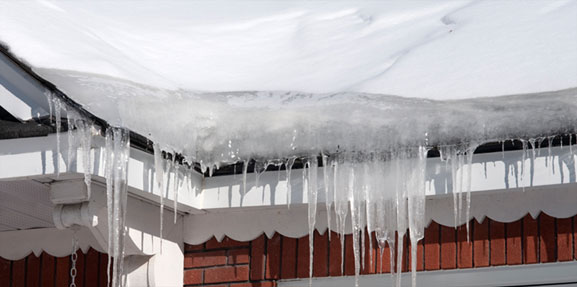
Ice building up along the edge of your roof can be more than a winter nuisance. Recurring ice dams may allow water to back up beneath the roof covering and leak into your home. Understanding why they form is the first step toward addressing the problem.
How ice dams form
When part of a snow-covered roof becomes warm enough, the snow melts and water runs toward the eaves. If the roof edge is below freezing, that water can refreeze and gradually form a ridge of ice. Water from further melting may collect behind it.
Heat escaping from the house can contribute to this cycle. Weather, sun exposure and the shape of the roof can also play a role, so ice alone does not identify a single cause.
Look beyond the visible ice
For a home with a conventional ventilated attic, the assessment should consider air leaks from the living space, the condition and coverage of the insulation, and the ventilation paths. Adding vents alone does not address heat leaking through the ceiling.
Warm, moist indoor air entering a cold attic can also contribute to condensation or frost. Persistent moisture may damage materials and encourage mould growth. Water stains, damp insulation or recurring frost deserve attention, even if you have not noticed a ceiling leak.
Three areas to assess
- Air sealing: Check how well the ceiling separates the heated rooms from the attic, including the attic hatch and openings around services. These details need suitable materials and attention to required clearances.
- Insulation: Look for gaps, uneven coverage or damaged insulation. The appropriate amount depends on the roof assembly, the existing conditions and applicable requirements; one R-value is not a solution for every home.
- Ventilation: In a ventilated attic, check that the intended intake and exhaust paths are open. Insulation should not block soffit ventilation. Other roof assemblies require a different approach.
Address the cause safely
Do not climb onto an icy roof or chip at the ice with tools that could damage the roof covering. If ice removal is needed, contact a qualified professional. Active leaks or signs of damage call for prompt assessment.
Removing an ice dam may relieve an immediate problem, but recurring ice calls for a closer look at the building. The scope and cost of repairs depend on the cause and whether damage has already occurred.
Contact Construction Viking to discuss the conditions you have noticed and the next steps for your home.
Further reading: Natural Resources Canada — Keeping the Heat In: Roofs and attics.